
World Food Day took place on 16 October 2026 under the theme “Innovate today. Nourish tomorrow.” The message puts agricultural innovation in a wider context than the latest machine or software platform. A useful idea must fit the people, resources and conditions involved in producing food.
Innovation includes knowledge as well as equipment
The Food and Agriculture Organization’s 2026 campaign connects forward-looking solutions with traditional knowledge and inclusive approaches. Its stated ambition is access to sufficient, diverse, safe and nutritious food while safeguarding the planet for future generations.
That framing is a useful starting point for reading technology claims. A new tool may be impressive, but its value depends on the problem it solves. Better information, a revised process or a way to share existing knowledge can matter alongside a new piece of hardware.
Begin with the problem on the farm
Before comparing products, describe the task in plain language. Is the difficulty knowing when equipment needs attention, keeping records consistent, coordinating labour or understanding changes in a crop? A clearly defined problem makes it easier to judge whether a proposed solution is relevant.
Include the people who carry out the work. Ask what happens now, where delays occur and what a better outcome would look like. Otherwise, a project can become a demonstration of a feature without a clear connection to everyday decisions.
Ask what evidence would change your mind
A trial needs a starting point and a way to compare results. Record the conditions, the time involved and the limits of what was tested. One good demonstration cannot establish that a tool will work equally well on another farm, crop or season.
Read the claim carefully: a forecast, a laboratory result and a completed field trial are different kinds of evidence. Ask who produced the findings, what was measured and whether the result includes the work required to maintain the system.
Think about access and ongoing use
A technology is only useful if the people expected to use it can do so reliably. Consider training, connectivity, repair, support and the ability to retrieve records. Establish who is responsible when something stops working, and how ordinary work can continue in the meantime.
Data also deserves attention. Before adopting a service, understand what information it needs, who can use it and how it can be exported. These are questions to raise with suppliers and advisers, rather than details to leave until a contract is ending.
Keep the broader goal in view
FAO’s World Food Day theme is an invitation to connect innovation with food security. It does not endorse every product described as smart or sustainable. Use that distinction when following announcements or planning a small trial.
For farms and organisations supporting them, a sensible next step is to identify one specific problem, agree what success means and review the evidence after a defined period. That gives innovation a practical purpose and makes it easier to learn from both promising results and disappointing ones.
This article discusses how to assess agricultural innovation; it is not a recommendation for a particular input, technology or investment.
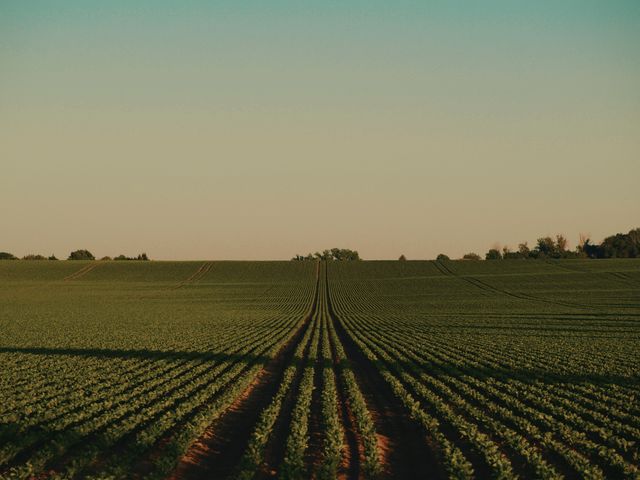
Information checked 25 October 2026. Illustrative farmland, not an FAO project or a documented technology trial. Photo: Anna / Pexels (licence).
Leave a Reply